...In-between sets from poet Cynthia Schwartzberg Edlow

Showing posts with label Lynn Melnick. Show all posts

January 25, 2022

Onward 2022

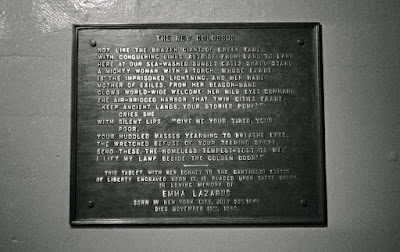
 A few weeks ago I received an email from the American Jewish Historical Society (AJHS) that an occasional poem I wrote for the Emma Lazarus Project: Poetry Contest was the first of two finalists, along with a winner. I was most delighted due to the fact that my poem "Dear American Lady" will be archived with Emma Lazarus' original sonnet "The New Colossus." 

In her acceptance email with the AJHS, Manager of Programs & Operations Rebeca Miller wrote, " Our judges had an incredibly tough time choosing from hundreds of incredible entries made from across the country. Only two finalists were selected for each category, and in honor of this accomplishment we have posted your poem on the AJHS website in our Poetry Gallery...[and] your poem will be placed next to the work of Emma Lazarus in the AJHS archive to be appreciated for generations to come." (italics mine) 

I have to say those are pretty stellar digs for my poem to be archived with "The New Colossus." 

And coming on the heels of my intentionally taking a break from writing/publishing the whole of 2021. 

As defined by the Poetry Foundation, an occasional poem is one written to "describe or comment on a particular event...," and generally not considered the most pleasurable of endeavors to execute, as the subject matter is handed to a poet on a prescribed platter and while not distinctly uttered, a party line is courteously insinuated. That said, "I acknowledge" the latter half of the last line of "DAL" is a party line. I felt the need to wrap it up, and I was sorely limited to 14 lines, a truncation of my natural narrative poetic voice.

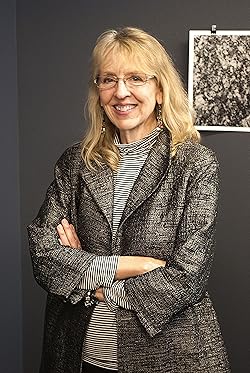
Poet Lynn Melnick

As it happens, the brilliantly soulful and accomplished poet, Lynn Melnick, was teaching a series of poetry workshops via Zoom about the Statue of Liberty this past fall for the American Jewish Historical Society (AJHS). Lynn is also a friend of mine, and I was happy about three things: I would actually get to see her again (think Covid-culture), chatting, smiling, teaching, sitting at her now-famous perch window overlooking a Brooklyn avenue; she taught poetry workshops at Columbia so I was thinking, hey, let me get a listen up at what those ivy students are privy to; and what!, dealmaker! - all the workshops were free. The more I frequented Lynn's workshops, which were not many occasions but enough to warrant a serious quandary for me: Lynn had obviously prepared these polished, chock-full sessions filled with insight into the motivations of Lazarus, Jewish history at the time of the construction of the Statue/writing of "The Great Colossus," the obvious rifts in "the times" between then and now, poetic themes using contemporary poetry and the Lazarus poem, and the bigger draw of the contest the workshops were propelling toward. I knew I had to enter the contest. 

I am glad that I did and that I wrote the poem I personally felt. This is an image of what was once a small green tree sapling. The Originals: Early Native Americans would bend these little saplings in dense forests to assist them in "recording" their routes to and from their journeys. If you happen upon them in your travels, they are considered rare good fortune.
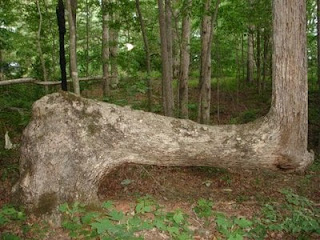
Native American Route Marker from Tree Sapling

Many people are aware that poet Emma Lazarus wrote the famous sonnet "The New Colossus" in 1883 about the Statue of Liberty. Very few people, I am guessing, know that Emma Lazarus was Jewish. I did not know this. I was quite surprised at this fact. I am constantly surprised, as a half-Jewish woman, how little Jewish people are celebrated for their vast and myriad gifts. I want to see that rectified.

Emma Lazarus

Emma Lazarus was 34 years old when she wrote one of the most applauded and prominent poems in, and about, the United States of America. She died four years later. 

The text of the poem entitled “The New Colossus,” by Emma Lazarus, mounted on the base of the Statue of Liberty. The sonnet was written in 1883, and donated to help raise money for the statue’s pedestal. The text was later cast in bronze and and mounted in 1903


***
A public thank you to the judges of the Emma Lazarus Project: Poetry Contest - the Staff of American Jewish Historical Society, Actor Cherrye J. Davis, Poet Lynn Melnick, and Painter Josh Smith.

Looking down at the statue from its torch, circa 1890

(See article re: last two photos. 
  https://rarehistoricalphotos.com/statue-liberty-history-pictures-1875-2000/)
-----------------------------------------------------------------------------------------------

In the interim since I first put up this post in November, 2022, the AJHS has moved the poem on its website. So, it follows if you'd like to have a read at it.


 DEAR AMERICAN LADY

By Cynthia Schwartzberg Edlow


We acknowledge. Beneath the sun-spoked diadem

Encircling your celebrated head these two centuries plus,

You remain marvelously fair. Neither the heavy torch

Nor the massive, dated tablet have felled you. Still you hospitably

Offer greeting. Once you were a foreigner. Here is home where

Originals thrived. They toiled and feasted upon this land,

Trod many-hued dirt paths to reach five bejeweled

Great lakes, deciphered bird calls from bird cries,

Studiously bent tree saplings into route markers that stand

Today immense in the forests. To clear and cleanse the land

Fire was mastered. Reluctantly they gave way for others.

They continue to forge on.                 With iron muscle and copper skin    

Across pitching cold waters you came shipped.

Your relations courted an ocean liner’s sterling upper decks                    

Expectant of fertile country. Three decks below in dank wishful

Steerage, a stew of languages sung out for ground that would

Grant trust. From cargo ships, by haunted hull despicable,

Multitudes in shackled chains. Yet, for all, their blood, their kinfolk, their

successors onward forge. All who witnessed the boats sail in long ago,

And sail in still. Under your golden flame, the promise ever cresting.


2021 Archival Finalist – Emma Lazarus Contest

American Jewish Historical Society


///

February 18, 2018

Horn Section All Day Every Day

Welcome to the world, my new poetry collection! Best wishes, and cheers~


♡~


October 8, 2017

Thank You, Lynn Melnick

Advance praise from Lynn Melnick, 
for my next book of poetry, Horn Section All Day Every Day, forthcoming from Salmon Poetry in February/2018~

Spirited and poignant, funny and contemplative, the poems in Horn Section All Day Every Day bring us the world from a visitor’s point of view, sometimes literally, and all the time reminding us that, although we are just travelling through this universe, it’s what we do with our stay that matters most. Like the instruments of the title, these poems don’t stop; these poems wonder how we got here and why we must leave, they constantly assess and reassess the input the contemporary moment throws our way. It is not often I feel tender affection for a book, but Edlow has created a space of such hope and vitality in these poems, that, long after I put the book down, this splendor extended past the page and softened how I felt moving through this world we occupy together, now.— Lynn Melnick  

August 23, 2017

My Poetic Court of Appeals


For quite a few months I've had this lovely secret to share. Today's the day. 
Immeasurable gratitude for their advance praise on my forthcoming poetry book, Horn Section All Day Every Day~I hereby deliver with all
appropriate pomp and circumstance, and with a bountiful horse-drawn carriage filled to capacity with the most aromatic, colorful, overflowing floral appreciation and affection to 
Cynthia Hogue, David Kirby, and Lynn Melnick. 

I remain stunned by your touching, insightful, and marvelous statements over my second collection. Each of you saw what I did not, or chose not~this is indeed a collection of poems about unconventional relationships: the mysteries, the weirdnesses, the irrefutables, and the wonders. I protest it no longer. How could I--with the three of you in whose counsel I rely because that much wisdom I have been known to retain. Lo, the three of you! I do believe that over the next few months up until publication from Salmon Poetry in February/March, I may find myself unable to resist posting, on separate occasions, each of your chiming declarations here on this blog. Yes, yes, to hope to whet appetite, but also, because you are right, all three of you, from your varied backgrounds and generations, calling the same lady up top on her verse. 

Image result for cynthia hogue photos
Cynthia Hogue   

David Kirby

Lynn Melnick

April 13, 2013

"We Gonna Eat Next Week; Gotta Eat Next Week"


Thank you Mr. Redding. Thank you kindly. How I wish you were still with us. A true poet in your heart, you were. 

So, in honor of Nat'l Poetry Month, in the past one week alone, I’ve attended three poetry readings, captured four astonishing poets delivering their work, read the most profound debut poetry collection I’ve ever encountered, and drove, by myself, 92 mph down I-10 to Tucson, and back to Gilbert. And lived to tell.

R.S. Mengert
So much to herald I’ll try to allow the pictures to do most of the talking~~~~~~~Last Friday I was honored to host the duo poetry readings of John Gosslee and R.S. Mengert at Changing Hands Bookstore. It was a lovely evening filled with the audience's camaraderie for the commitment to poetry. Nights like that are really magical. The Lowdown:

R.S.Mengert: engaging, charming, strong imagery, narrative poet. God bless him, he wore a coat and tie, with a vintage tie clip. He is a fine poet, writing good sound work. And you could not meet a nicer person. He is currently teaching at Phoenix College, so if you're a budding writer or poet, for goodness sake's, get over there, enroll and take a class with him. You'll be happy you did. 

John Gosslee: promoting his book 12: SONNETS FOR THE ZODIAC. Wild man, wilderness poetry, lyrical, vexing, teasing. Looks eerily and exactly like a young "Moondance" Van Morrison. [Can't help but score him big points for that one.]


John Gosslee
John is throwing red-wax-sealed bottles into large bodies of water as he traverses the country on his book tour. Each bottle has one of his poems inside. I was so enthralled by the bottle he brought up to the lectern that at the afterward party in the pub next door, he gave me that particular bottle: #62 out of 150. The poem inside is called “Portrait of an Inner Life.” It perches atop my writing desk these days.  I love everything about it -- the poem inside, the numbered scrap of paper, thick crimson wax atop the bottle, delicate red ribbon that emerges out of the wax, winding its way down the length of green glass. [He scored more points for that one too.] 
What's a woman to say? You can become seduced by a bottle.

A few days later it was off to the Tempe Center for the Arts to hear the endearing clarity of the poetry of Jeredith Merrin. Her poetry is breathtaking in its normalcy. I found myself so moved by the decency and precision in her work. I knew I'd be a fan of her poetry for life. She has two collections out, BAT ODE and SHIFT, both from The University of Chicago Press. Her poetry consistently reminds me ~~ tell the truth, tell the truth. Bells and whistles are for cows and trains. Here's one of her brilliant, serene poems:
FAMILY REUNION

The divorced mother and her divorcing
daughter. The about-to-be ex-son-in-law
and the ex-husband's adopted son.
The divorcing daughter's child, who is

the step-nephew of the ex-husband's
adopted son. Everyone cordial:
the ex-husband's second wife
friendly to the first wife, warm

to the divorcing daughter's child's
great-grandmother, who was herself
long ago divorced. Everyone
grown used to the idea of divorce.

Almost everyone has separated
from the landscape of a childhood.
Collections of people in cities
are divorced from clean air and stars.

Toddlers in day care are parted
from working parents, schoolchildren
from the assumption of unbloodied
daylong safety. Old people die apart

from all they've gathered over time,
and in strange beds. Adults
grow estranged from a God
evidently divorced from History;

most are cut off from their own
histories, each of which waits
like a child left at day care.
What if you turned back for a moment

and put your arms around yours?
Yes, you might be late for work;
no, your history doesn't smell sweet
like a toddler's head. But look

at those small round wrists,
that short-legged, comical walk.
Caress your history--who else will?
Promise to come back later.

Pay attention when it asks you
simple questions: Where are we going?
Is it scary? What happened? Can
I have more now? Who is that?

-- Jeredith Merrin

And then it was a race to pack an overnight bag. The next day I drove down to Tucson, which from the Valley is a line as straight as a ruler, but if you know me you know that driving a car is not a highlight for me. It is not a joy; it is not an achievement. This does not mean I am not a good driver; it only means I do not care to be a driver. I care to be a "driven". But I do know the meaning of "imaginative speed" if my back is to the wall. And by the way, if you're interested in a trickle of water for a shower and very low, low light to get dressed and made-up in for a hotel room, but you want everything else to be really hippity-hop, chi-chi, reserve a room at aloft.  


You may not feel like you got all the shampoo out of your hair, but if you want to sit on a lobby couch, surrounded by kitschy furniture and eat so-so finger food, this is the place. 

But with it, I put up. Because I'd come to hear a seer read at the University of Arizona Poetry Center. Ilya Kaminsky was reading. And this reading I will never forget. Yes, he looks like an overgrown cherub, and yes, he's received more accolades than the next twenty poets behind him. Yes, he wore the obligatory washed-out jeans. And yes, due to his deafness, and his thick, tone-impaired Russian accent, his voice is like listening to tumbling crystals through roiling porridge. And yes, his book, famous now, DANCING IN ODESSA, has deservedly won numerous prestigious awards. And yes, his subsequent book, MUSICA HUMANA, too. The poems, as he was reading them, were displayed on film on the wall behind him. Poems crammed with the kissing of the behind of knees, the singing and unsinging in the streets of cities possibly there and possibly not, the worshipful appreciation of a loaf of bread.  The crowd grew so large they had to open the Poetry Center's wall, which really is elaborate glass doors, so that they could add eight, nine rows of twenty chairs, each row, outside into the courtyard.  You know how sometimes at a reading you'll let your mind drift, or look around at any sort of movement,  or crane your neck to see who's just arrived? This did not happen that night. I tell you, we sat entranced. The 150+ of us. We didn't move a muscle, collectively. At one point, he looked up from his book and he said, "Are you all asleep?" You could hear a pin drop, we were so mesmerized. I swear this is true. Ilya Kaminsky identifies himself a poet, but believe me, this man is a rabbi.


The wonderful debut collection of poetry I've discovered? The astonishing one? The one that makes me weep with the pure joy of its poetry? There's been a lot of talk lately about "The Next Big Thing." Everybody loves the moniker. We've all been bandying it about in reflective self-interviews. I have found the poet who fits this mantle, without any fanfare whatsoever. Her name is Lynn Melnick. Her book is IF I SHOULD SAY I HAVE HOPE, just out from a great independent lit press, YesYes Books. This is a picture of her. She is unassuming, humble, kind, sweet, humorous, generous and as gifted like an angel poet. One day the baton will be passed to her.

I don't say this often. In fact, I don't believe I've ever said this before. 
Lynn Melnick. The real thing.


Wallflower
It used to be that I was the prize
for stalking shadows, for keeping your trap shut.
I'd paint a corner to set myself in,


round that corner, smash a corner to see
what sprung up next. When I knew you loved me
you let me stay the night.


If I were you I'd erect a staircase and I'd climb
stone by stone just to escape myself.
Believe me, I've tried.


But you wanted me with you.
And I get it now.
The fronds are grooving on their flamingo stalks.


They're all we like about what we call California.
Here's our world, then, a dawn in the distance.
If you had told me, when I could speak only in whispers,


that the light hitting the sickly coral of the beach hotels
could travel further inland
and all the way east to find me,


this spot of a girl, grayer and gray and pink,
I might have hastened from my ambush
angling upward to the moon,


black and gravitational,
upending the illuminated trappings
we cannot live in this life without.


-- Lynn Melnick